Over the past two years, “AI agent” has found its way into almost every conversation. Demo videos, proof of concept projects, impressive presentations and so on. But what most organizations actually experienced was this: the agent seemed to work, yet the moment it touched real business processes, something fell short.
And unfortunately, it wasn’t even a technology problem. It was more of a “middle distance” problem, one that stemmed from the gap between building a prototype and actually running it in production: deploying it, measuring it, managing it.
So, How Does Agentforce Close This Gap?
To start with, Salesforce’s announcements at TDX 2026 offer concrete answers to this question. And in doing so, they also bring a range of solutions for every stage of the agent development process:
- Development that stays connected to the business: Take Agentforce Vibes 2.0, for example, it offers a development environment that understands the company’s own Salesforce metadata and supports multiple models. In other words, the agent starts with the data, business rules, and approval processes accumulated over the years. It doesn’t need to rediscover anything from scratch.
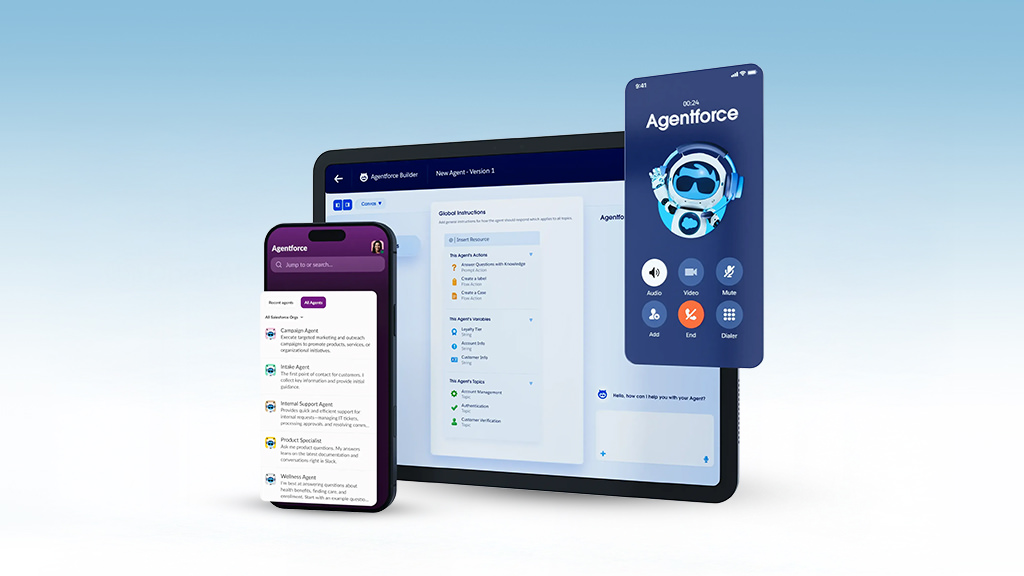
- Define once with multi-channel, run everywhere: With the Agentforce Experience Layer, you define an agent once. It runs across web, mobile, Slack, and voice channels without rebuilding for each. The channel doesn’t change, the agent doesn’t change, only the surface does.
- Testability means managing behavior: Agents don’t behave like traditional software, and they don’t produce the same output every time. But this isn’t a bug, it’s a behavior that needs to be managed. ADLC tools close the loop by covering the journey from sandbox to production with testing, security reviews, and observability built in.
- Managing agents by making them visible: Agent Fabric makes it visible where agents are running across the organization, what they’re doing, and at what point they require human approval. Because today, uncontrolled agent sprawl carries real operational risk and these tools are designed precisely to prevent that.
The Inspark Perspective
One of the most important things we’ve been saying for a long time is this: no matter how intelligent AI may be, its value is proportional to how well it actually works within the organization. And that’s exactly what Agentforce puts to rest. The development environment, the testing layer, multi-channel architecture, observability and so on. None of these are standalone features. They are all, in fact, answers to the same question: “Can we trust this system?”
As Inspark, we start every project with our clients by asking this very question. Because we know that the real return on a Salesforce investment doesn’t show up the moment the agent runs, it shows up when it’s measured, managed, and embedded into the heart of the business.
If you’re ready to turn your Salesforce investment into real business value, take the first step with us, bring your challenges to Inspark’s experts and let’s build the right solution for your organization together.