For nearly 25 years, the “Google Model”—the absolute ruler of the digital world—was built on users entering a keyword and selecting from thousands of results. However, as emphasized in the recent article by strategic consultant and academic Serkan Koç, this model is now being considered “inefficient.” This is where Agentic Commerce steps in, liberating the user from this cognitive load. This shift is more than just a technology update; it represents a fundamental change in the “operating system” of commerce. As INSPARK, we are closely analyzing this new era, which evolves in parallel with Salesforce’s Agentforce vision.
1. A New Paradigm in Payment Systems: Agentic Commerce and the Farewell to “Checkout”
The “Checkout” process has been at the center of digital commerce transformation for years. Today, however, we are talking about the autonomization of the payment action itself, rather than just optimizing a payment page.
In traditional e-commerce, brands reach consumers through visual interfaces on websites and apps. In the era of Agentic Commerce, the interface becomes “invisible.” Consequently, User Experience (UX) gives way to Agent Experience (AX). If a purchasing decision is made by an AI agent rather than a human, brands need structured data that agents can read, rather than bright “Buy Now” buttons.
This marks the peak of the “Zero-Click” economy. Giants like Visa, Stripe, and OpenAI are already shifting the “human-to-interface” interaction at the core of commerce toward “agent-to-agent” protocols.
For businesses, the question is shifting from “How do I block bots?” to “How do I welcome trusted purchasing agents?” At INSPARK, we recommend the following strategic steps:
- Agent-Ready Infrastructure: Product catalogs should be made compatible with structured data and dedicated API endpoints that AI agents can easily crawl and understand.
- Trusted Agent Differentiation: Protocols like Visa TAP should be integrated to distinguish malicious bots from trusted agents with purchasing authority.
- Agentforce Integration: By leveraging Salesforce Agentforce, businesses can establish an “Agent Center” to manage both sales agents and incoming buyer agents.
2. CES 2026 and the Invisibility of Commerce
At CES 2026 in Las Vegas, a key topic was how commerce is no longer a “destination” but an “invisible service” within our living spaces. Traditionally, commerce began when consumers “noticed a need.” However, technologies like GE’s Instacart-integrated smart refrigerator and LG’s home assistant robot (CLOiD) are redefining this. These AI-driven devices don’t just notify you that “milk is out”; they analyze consumption speed, nutritional preferences, and current market prices to autonomously create the most optimal order.
In this world of autonomous ordering, the “shelf war” for brands is replaced by an “algorithm war.” As traditional advertisements (TV, billboards, etc.) lose impact, two concepts become paramount: Loyalty 2.0 and Data Integration. Loyalty is no longer just an emotional preference but a “default setting” within a device.
For brands in recurring purchase categories (e.g., pet shop, personal care), INSPARK suggests:
- Commerce-as-a-Service: Moving beyond selling products to providing services like “managing the household’s dairy needs” via Salesforce Commerce Cloud.
- IoT and API-First Approach: Adopting a Headless Commerce roadmap to ensure products can “talk” to smart home assistants.
- Data Cloud Integration: Using Salesforce Data Cloud to process real-time usage habits and automate personalized offers.
3. The New Frontier of Modern Marketing: LLM Referrals and AIO Strategy
At INSPARK, we closely follow the AIO (AI Optimization) revolution in data processing and continue to analyze how our business partners should position themselves in this new landscape, particularly on the marketing front. Traditionally, the core e-commerce strategy was: “How do I bring the customer to my website?”. However, in the era of Agentic Commerce, the customer may never visit the website at all.
Instead, Large Language Models (LLMs) provide refined answers directly to the user. Meanwhile, autonomous agents—analyzing the user’s specific needs—can execute the entire purchase transaction directly through your APIs. In this new era, marketing will target more than just human psychology, colors, or emotional triggers. Brands’ new target audience will be “Autonomous Buyers”.
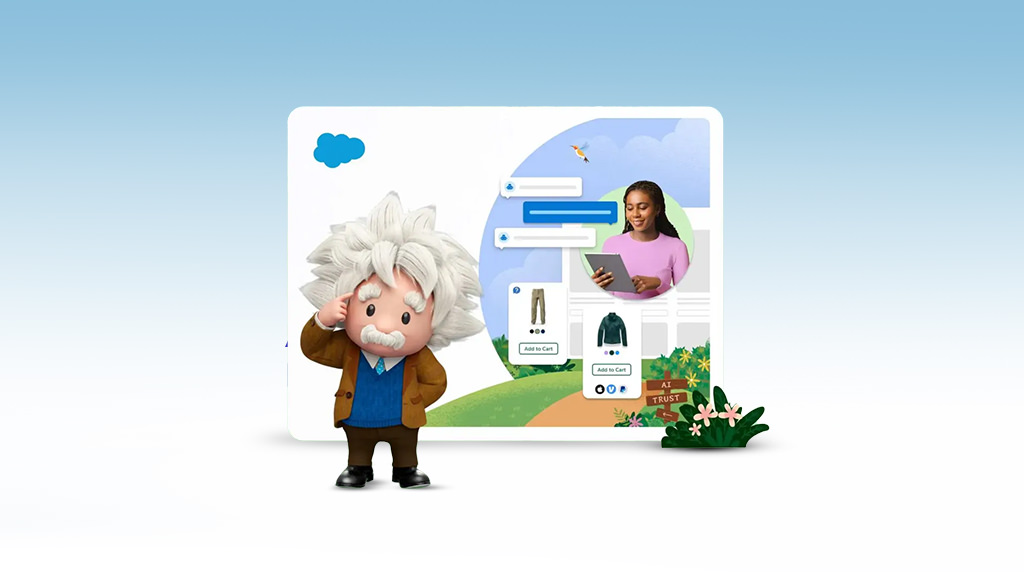
Digital commerce is clearly shifting from “displaying ads” to “problem-solving”. Just as the Google era taught us how to access information, the Agentic Commerce era promises to turn that information into action on our behalf. For the marketing world, the fundamental question is shifting from “How do I advertise?” to “How do I ensure that agents prefer this brand?”. In the age of AI, marketing is becoming a race for reliability and data accuracy rather than just a competition for attention. While ranking first on Google is a great start, for brands to truly prepare for the AIO and Agentic Enterprise ecosystems, collaborating with INSPARK’s expert team to future-proof marketing strategies with Salesforce’s AI capabilities is the right choice.
4. From AI Experimentation to Measurable ROI and Profitability
While 2025 was a year for “recognizing and experimenting” with AI, 2026 is being recorded as the year of ROI (Return on Investment) and sustainable profitability. This new understanding of efficiency goes beyond viewing AI as a mere accelerator , it positions AI as an intelligent shield that prevents financial losses and guarantees continuity in the customer experience.
For instance, in return processes—one of e-commerce’s largest cost drivers—brands are moving away from “one-size-fits-all” policies toward AI-based dynamic scoring systems to combat return fraud and inefficient costs. At INSPARK, we are conducting R&D aligned with this technology. By consolidating historical purchase behavior, return frequency, and product interaction data through Salesforce Data Cloud, it is now possible to create a personalized “return score” for every customer.
According to 2026 data from the UK’s Boxing Day statistics, online shopping density has reached its peak for the last decade. This is not a step backward, but a “Phygital” (Physical + Digital) revolution backed by digital power. For businesses aiming to bring their operational efficiency up to 2026 standards, INSPARK experts recommend the following roadmap:
- Predictive AI Integration: Utilizing Salesforce Einstein models to predict which products are highly likely to be returned before the return even occurs.
- Holistic Customer View (Customer 360): Unifying sales, service, and logistics data on a single platform to conduct real-time profit-and-loss analysis.
- Personalized Logistics: Choosing shipment methods optimized by profit margins and customer value, rather than offering the same shipping option to every customer.
AI has already transformed from a “technological Project” into a “financial strategy” tool. Brands that optimize their operational processes with Salesforce’s AI and data solutions and achieve an ROI-focused digital transformation will begin to differentiate themselves in 2026’s high-pressure market.